
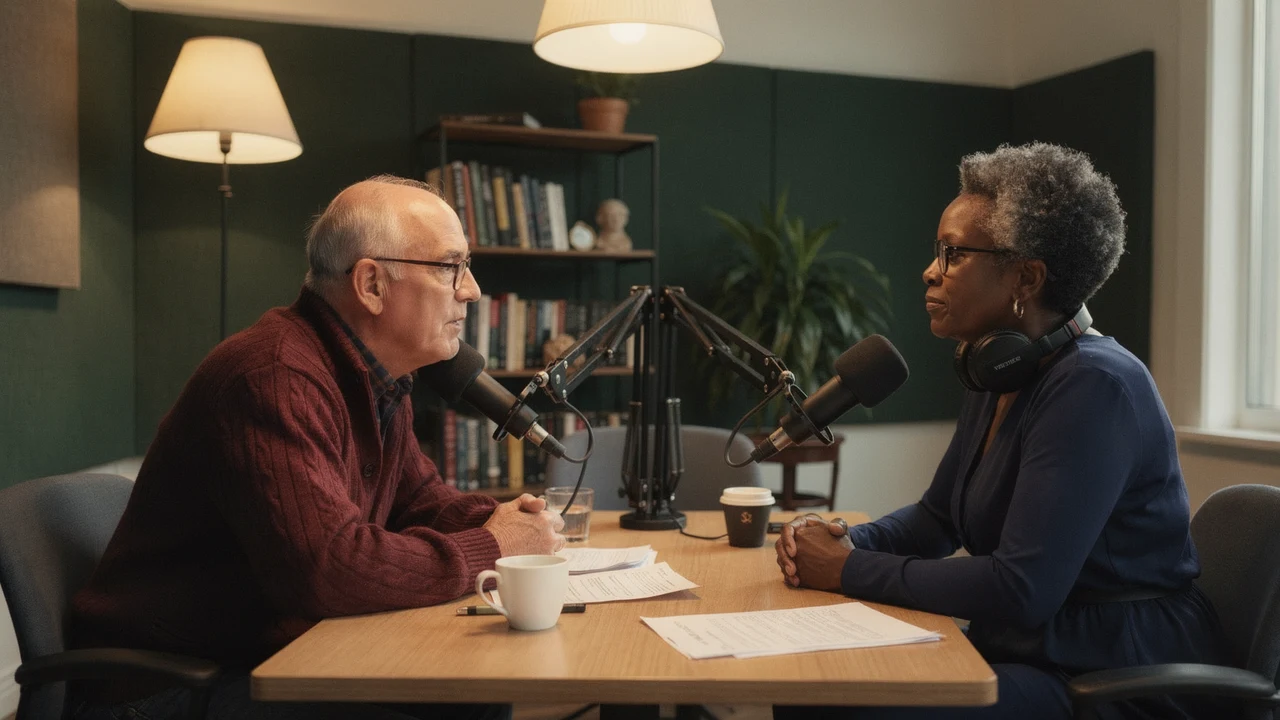
Episode 6: Anonymous whistleblowing – what can you promise?
The pictures and voices are AI-generated.
Podcast · 7 minEpisode 6: Anonymous whistleblowing – what can you promise?
Patrick and Grace talk about anonymous reports in Norway: why employers must follow them up, the difference between anonymous and confidential, and why a promise of anonymity does not always hold in court.
Read the article → Listen on Spotify RSS
Read the transcript
PatrickHi, and welcome to Whistleblowing in practice, a podcast from Trustcom. I'm Patrick.
GraceAnd I'm Grace.
PatrickToday we're talking about reports that arrive without a name. Grace, is that common?
GraceMore common than people think. And if you ask anyone who has received reports for years, they tend to say the same thing: some of the most important cases came in anonymously.
PatrickWhy do you think that is?
GraceBecause the people most afraid of the consequences are often the ones closest to the problem. Think of a care assistant in a municipal home care service who sees that medication isn't being given. She may not want the nurse she works with every day to know it was her.
PatrickSo without anonymity, that report might never have come in.
GraceQuite possibly. That's why this matters so much to employers.
PatrickLet's start with the law. Does a Norwegian employer have to offer anonymous reporting?
GraceNo. The Norwegian Labour Inspection Authority, Arbeidstilsynet, is clear about that. There's no duty to set up anonymous reporting.
PatrickThat's a clear answer.
GraceBut the second point is just as clear. The employer must follow up every report, including the anonymous ones.
PatrickSo you can't put an anonymous letter in a drawer because you don't know who wrote it.
GraceNo. Section 2 A-3 of the Working Environment Act says the employer must make sure the report is adequately investigated within a reasonable time. That duty applies whoever sent it.
PatrickEven if the report is vague?
GraceThen you do what you can with what you have. But this is exactly where anonymous reports get difficult. We'll come back to that.
PatrickDoes the word anonymous appear in the law at all?
GraceNot in chapter 2 A. The law says what the procedure must contain, but nothing about anonymity.
PatrickSo it's a choice the organisation makes for itself.
GraceYes. And it should be a considered one.
PatrickI often hear people use anonymous and confidential as if they meant the same thing. Do they?
GraceNo, and the difference matters. Confidential means the recipient knows who you are, but keeps it to themselves and only shares what's needed to handle the case.
PatrickAnd anonymous?
GraceNobody knows who reported. Not even the recipient.
PatrickWhich is better?
GraceIt depends. A confidential report is easier to investigate. You can call the person, ask what she saw, and judge how sure she is.
PatrickWhile the anonymous one protects the whistleblower better.
GraceYes, but it gives you less to work with. That's why many organisations offer both and let the whistleblower choose.
PatrickAnd the procedure should say which one you offer?
GraceAbsolutely. Otherwise someone may believe she's anonymous when she has only been promised confidentiality.
PatrickNow for the part I'm most curious about. If an organisation promises anonymity, does that promise hold?
GraceNot always. And that's the hardest part of this topic.
PatrickWhen does it become a problem?
GraceTypically when the case ends up in court. Say a department manager is dismissed after several reports and sues the employer. He may then ask to see the reports and to know who is behind them.
PatrickAnd can he get that?
GraceIt can happen. Borgarting Court of Appeal in Oslo dealt with a case like this in May twenty twenty-three. The district court had ordered the employer to hand over an overview of who had reported and what they had said.
PatrickWhat did the Court of Appeal do?
GraceIt set the order aside. But the reasoning is the interesting part.
PatrickGo on.
GraceThe court said that a private promise of secrecy is not enough on its own. What weighed heavily was the employer's duty under the Working Environment Act to prevent retaliation, and the risk of destroying the trust of those who had been promised anonymity.
PatrickSo the promise alone didn't save them.
GraceNo. The court also noted that the employee already knew some of the content and could bring other evidence. It was a case-by-case assessment, and another case could go differently.
PatrickWhat does that mean for an HR director writing the procedure?
GracePromise what you can keep. That you won't share the identity voluntarily, and that you'll argue for protection if someone demands it. Don't promise that nobody, under any circumstances, can ever find out.
PatrickYou said the practical side is what makes anonymous reports hard. What did you mean?
GraceThat the recipient can't ask questions. Imagine a report that says: the warehouse manager harasses people. No names, no dates, no examples.
PatrickThat's almost impossible to act on.
GraceYes. You don't know which shift, who it concerns, or what actually happened.
PatrickSo how do you solve it?
GraceWith a channel the whistleblower can come back to. She gets a code, or a sequence of words, when she submits, and with that she can log in again, read the questions and answer them.
PatrickWithout giving her name.
GraceNo name and no account. Then you can ask: which shift is it? Has anyone else seen it? And suddenly you have a case you can investigate.
PatrickDo people actually use that option?
GraceThey do. The NAVEX benchmark report this year shows that follow-up in anonymous cases is at its highest level in five years.
PatrickIs there anything to check in a channel like that?
GraceTwo things. Does it store anything that could identify the whistleblower, like an IP address? And does it remind people that attachments can give them away, such as the author name in a Word document?
PatrickSo you've received an anonymous report. How do you investigate it without knowing who sent it?
GraceStart with a limited preliminary review. Can the allegations be confirmed or ruled out without knowing who reported? Often they can.
PatrickUsing what?
GraceRotas, logs, emails, and conversations with several employees. If you talk to the whole shift and not just one person, it doesn't point at anyone.
PatrickAnd the person the report is about?
GraceHe should be told what the allegations are, and be given the chance to respond. That applies when the whistleblower is anonymous too.
PatrickEven if he doesn't find out who said it.
GraceYes. He can answer the substance. That's what matters most for a fair process.
PatrickFinally: what should the procedure say about anonymity?
GraceFour things. Whether you accept anonymous reports, and through which channel. The difference between anonymous and confidential. What you do to protect identity, and where the limits are. And that anonymous reports are followed up in the same way as any other.
PatrickThat last one sounds almost obvious.
GraceIt matters more than it looks. An employee who sees that anonymous reports lead to something is more likely to speak up next time. Perhaps with a name.
PatrickIf you had one piece of advice for an employer listening now?
GraceRead the sentence about anonymity in your procedure out loud. Does it promise something you couldn't keep if the case went to court? Then rewrite it this week.
PatrickA good place to start. You'll find the article on anonymous whistleblowing at trustcom.io.
GraceThanks for listening. See you in the next episode.
Two of our six regular hosts cover one whistleblowing topic per episode, in fifteen minutes or less. The voices are AI-generated; the content is written and fact-checked by Trustcom.